
Brachioplasty in New York, NY
Arm lift surgery for smoother, more proportional upper arm contour
Loose skin along the upper arms can be frustrating, especially when it does not improve with exercise, weight loss, or changes in fitness. For many patients, the issue is not simply excess fat, but stretched skin and soft tissue laxity that create hanging or uneven arm contour.
William J. Rifkin, MD offers brachioplasty, also known as arm lift surgery, in New York City for patients who want a more refined, balanced upper arm shape. His approach is straightforward and anatomy-driven: remove excess skin, improve contour, and place incisions as thoughtfully as possible while maintaining a natural, proportional result.
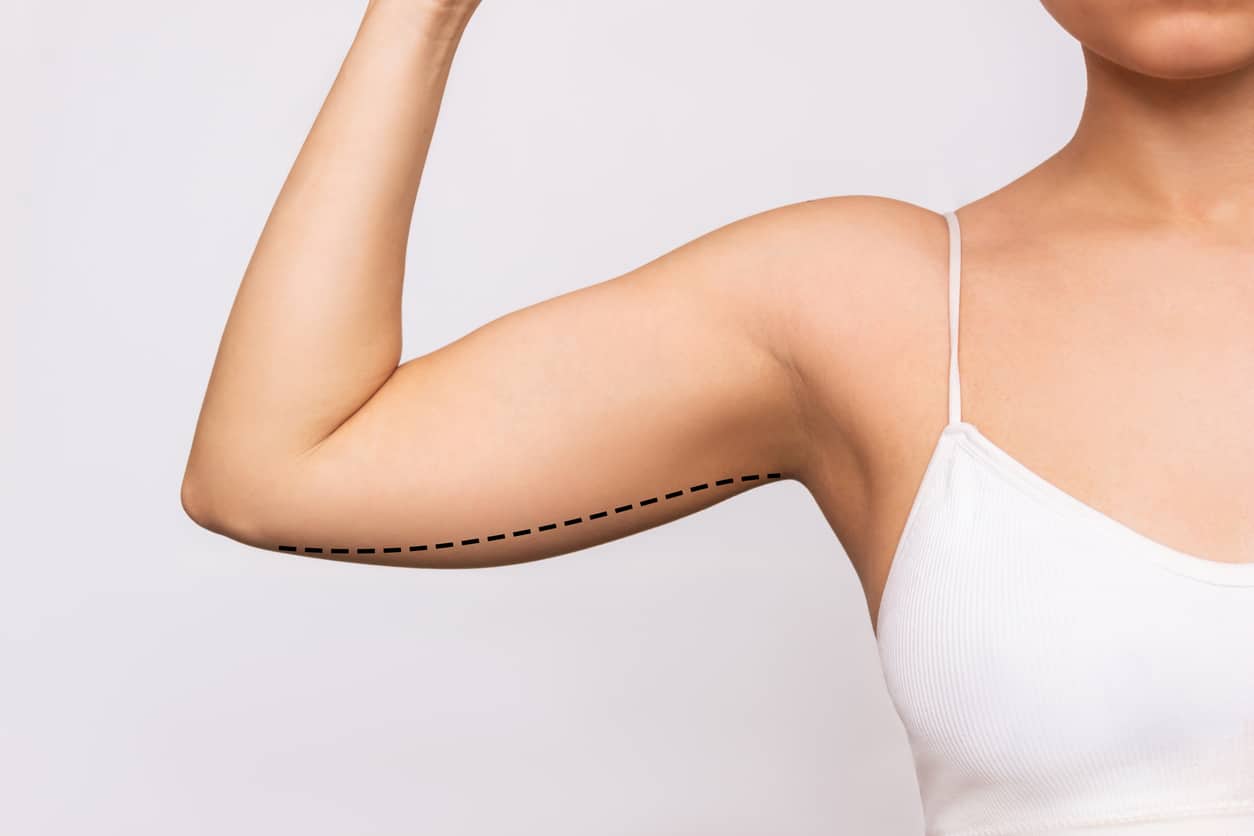
What Is Brachioplasty?
Brachioplasty is a body contouring procedure that removes loose, sagging skin from the upper arms. It is commonly performed for patients who have developed arm laxity after weight loss, aging, or genetics.
Unlike liposuction alone, which removes fat but does not tighten loose skin, an arm lift directly addresses the skin envelope. In selected patients, liposuction may be combined with brachioplasty to further refine fullness and improve the transition between the arm, underarm, and upper body.
The goal is not to make the arms look overly thin or unnatural. The goal is a smoother, more proportional contour that fits the rest of the patient’s body.
What Brachioplasty Can Improve
Brachioplasty may help improve:
- Loose or hanging skin along the upper arms
- Soft tissue laxity after weight loss
- Fullness or heaviness of the upper arms
- Poor arm definition despite diet and exercise
- Discomfort or self-consciousness in fitted or sleeveless clothing
- A mismatch between the arms and the rest of the body contour
For patients in New York City considering arm lift surgery, Dr. Rifkin focuses on creating a cleaner contour while keeping the result balanced and natural.
Who is a Good Candidate for An Arm Lift?
Good candidates for brachioplasty are typically healthy adults who are bothered by loose upper arm skin and have maintained a relatively stable weight.
You may be a candidate if you:
- Have excess skin along the upper arms
- Have had significant weight loss or changes in body composition
- Feel that your arms look disproportionate compared with the rest of your body
- Understand that brachioplasty involves a permanent scar
- Do not smoke, or are able to stop nicotine before and after surgery
- Have realistic expectations about recovery and results
The tradeoff with brachioplasty is important: the procedure can significantly improve loose skin, but it does require an incision. During consultation, Dr. Rifkin will review whether the expected contour improvement makes that scar tradeoff worthwhile for your anatomy and goals.
Liposuction vs. Brachioplasty
Some patients with upper arm fullness are better candidates for liposuction. Others need brachioplasty. The difference comes down to skin quality.
Liposuction may be appropriate when the skin has enough elasticity to retract after fat removal.
Brachioplasty is usually more appropriate when the main concern is loose, hanging, or stretched skin.
Liposuction with brachioplasty may be recommended when both excess skin and localized fat contribute to the arm shape.
Choosing the right procedure matters. Liposuction alone can make loose skin look worse if the skin envelope cannot contract. Brachioplasty is designed to address that issue directly.
The Brachioplasty Procedure
Brachioplasty is typically performed under anesthesia. The incision is usually placed along the inner arm or toward the back-inside portion of the arm, where it can be less visible in many natural arm positions.
Through this incision, excess skin is removed and the remaining tissue is reshaped to create a smoother upper arm contour. When appropriate, liposuction may be used to reduce fullness and refine the overall shape.
Dr. Rifkin’s approach emphasizes careful incision planning, balanced tissue removal, and a contour that looks proportional rather than over-resected.
Recovery After Brachioplasty
Most patients can expect swelling, bruising, and tightness during the early recovery period. A compression garment may be recommended to support the arms as swelling improves.
Light activity usually resumes within the first couple of weeks, while more strenuous exercise and heavy lifting are typically delayed until healing is further along. Final arm contour continues to improve over several months as swelling settles and the scar matures.
Scars are expected with brachioplasty. They usually fade over time, but they do not disappear completely. Proper incision care, scar management, and sun protection are important parts of recovery.
Brachioplasty Results
The result of brachioplasty is usually visible early, although swelling can temporarily obscure the final contour. As healing progresses, patients typically notice a smoother, firmer, and more streamlined appearance of the upper arms.
Results are long-lasting when patients maintain a stable weight. Significant weight fluctuation can affect the skin and soft tissue again over time.
Why Choose William J. Rifkin, MD for Brachioplasty in NYC?
Dr. William J. Rifkin is a fellowship-trained aesthetic plastic surgeon in New York City with advanced training in face, breast, and body contouring surgery. His background includes plastic surgery residency training at NYU Langone’s Hansjörg Wyss Department of Plastic Surgery and an Aesthetic Society–endorsed fellowship focused on aesthetic surgery. For brachioplasty patients, his approach is measured and practical. The goal is not an exaggerated or overly tight appearance. It is a smoother, more proportional upper arm contour with thoughtful scar placement and a result that fits the patient’s overall frame.
Frequently Asked Questions About Brachioplasty
Schedule a Brachioplasty Consultation in New York City
If loose upper arm skin is affecting your comfort, clothing choices, or overall body contour, brachioplasty may be worth considering. Schedule a consultation with William J. Rifkin, MD in New York City to discuss whether arm lift surgery is appropriate for your anatomy and goals.


